
Most business owners in Dubai don’t wake up wanting better search rankings. They want more inquiries, more bookings, and more paying customers. Yet the moment they start comparing SEO services in Dubai. The conversation tends to shift toward keywords, backlinks, and page-one positions. With very little said about what happens after someone actually finds the website. That gap is where a lot of SEO budgets get wasted.
This article looks at SEO from a different angle, not as a technical checklist. But as a customer-acquisition system that starts with search demand and ends with revenue. You’ll see how the search journey actually plays out for Dubai customers. How to structure a website that can compete in crowded local results. How to judge whether traffic is converting into real inquiries. And how to think about SEO investment. The same way you’d think about any other channel that’s supposed to bring in business.
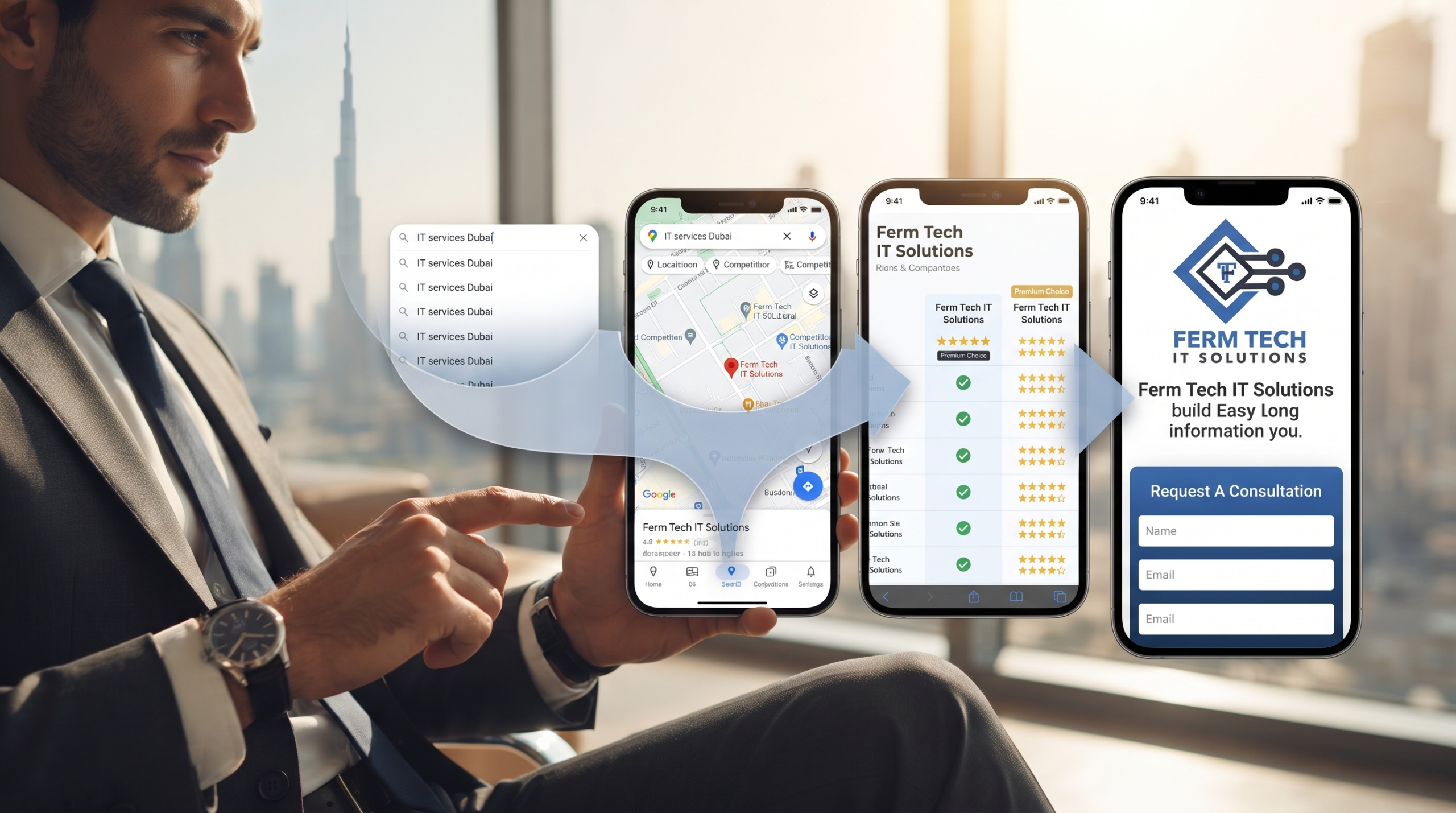
How Dubai Customers Search Before Choosing a Business
The Search Journey from First Query to Final Enquiry
A customer rarely finds a business through a single search. The journey usually starts broad, with a general service query typed on a phone. It narrows over several searches as the person adds location and compares. A shortlist, and checks credibility signals before making contact. Someone looking for an accountant, for example, might start with a general query. Then search for something more specific once. They understand their own requirement. Then finally search for an SEO company in Dubai name directly once they’ve decided who to contact.
For a Dubai business, this matters because each stage of that journey is a different search intent. And each intent needs a different type of page. A single service page trying to answer every stage at once usually ends up answering none of them well.
Why High Rankings Do Not Always Produce Qualified Leads
Ranking on page one for a competitive term feels like a win. But search rankings alone don’t pay invoices. A page can rank well and still attract the wrong audience. People comparing prices with no budget, and researchers. Who aren’t ready to buy, or users based outside the areas a business actually serves. Rankings only become valuable when the page underneath them matches. What the visitor is actually looking for and gives them a reason to take the next step.
This is why two Dubai businesses can rank for similar terms and get very different results. The one generating qualified leads has usually put as much thought into the page experiences. And offer as it has into the ranking itself.
Turning Google Visibility into a Consistent Lead Channel
Connecting Search Demand with Your Revenue Goals
Search visibility is only useful if it’s pointed at the parts of the business that actually generate revenue. Before pursuing a keyword, ask a basic question. If this page ranked first tomorrow, would the traffic realistically become a sale? A term with high search volume but low commercial relevance to your services can still consume most. Of an SEO budget if the strategy isn’t tied back to what the business sells.
Treating organic search as a lead generation channel, rather than a visibility metric, changes how priorities get set. Instead of chasing the keyword with the biggest search demand, the more useful question is which keywords connect. Most directly to inquiries, bookings, or sales opportunities.
Identifying Search Opportunities That Can Actually Generate Business
Keyword research for a Dubai business works best when it’s filtered through commercial intent, not just search volume. A term with moderate search demand but strong buyer intent is often worth more than a high-volume term. With mostly informational searchers. Review existing customer acquisition data: which services close most often, which inquiries tend to have higher value. Gives a much more reliable starting point than keyword volume alone.
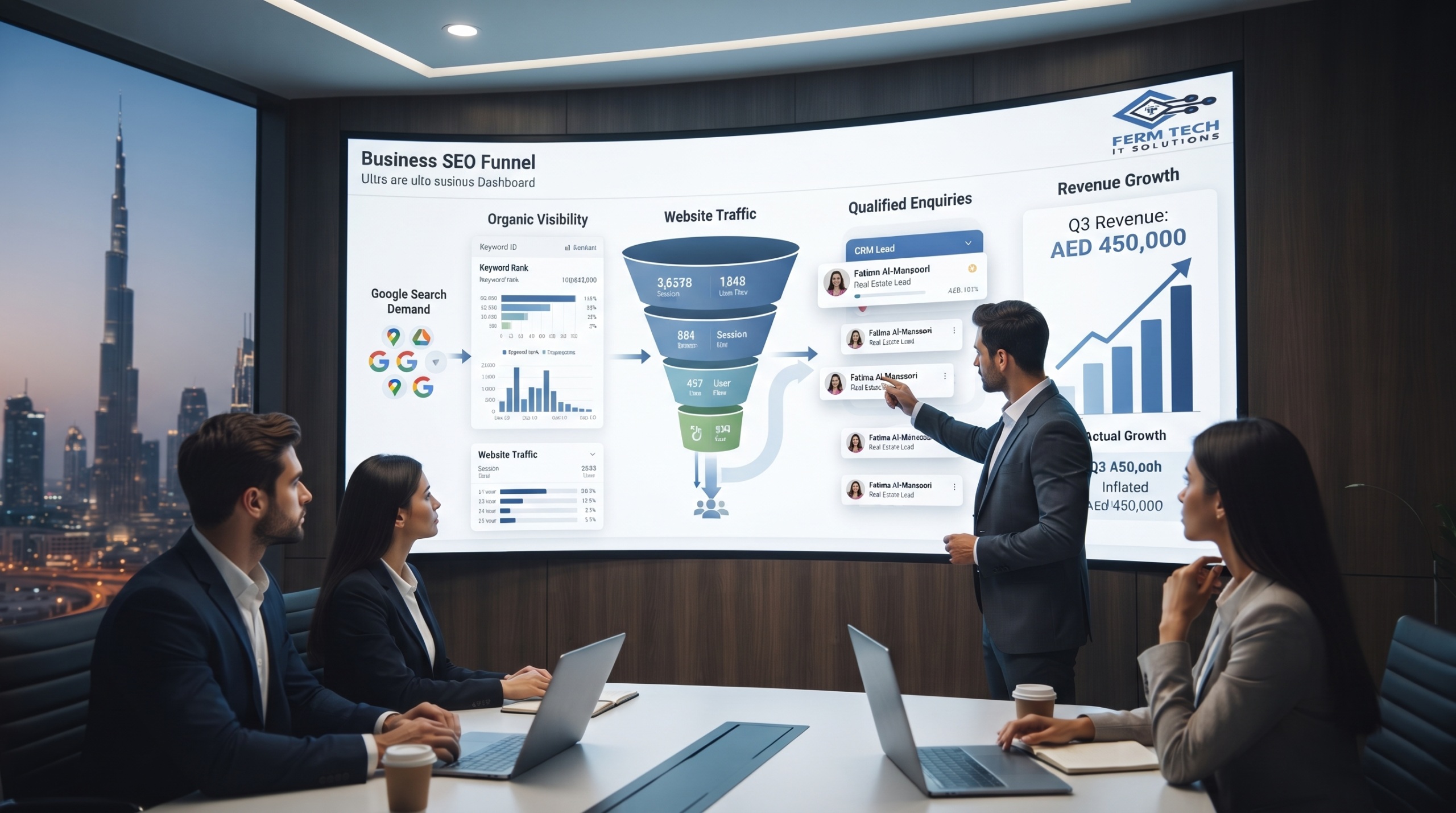
Building SEO around Dubai’s Buyer Intent
Separating Research Searches from Purchase-Ready Searches
Not every search means the same thing. Someone researching a topic is usually not ready to contact a business yet. While someone searching with a service name plus a location or a comparison term is typically closer to deciding. Confusing these two groups is one of the more common reasons SEO campaigns generate traffic without generating inquiries. The content answers a question but never gives the purchase-ready visitor a clear next step.
Mapping Keywords to Different Stages of the Customer Journey
Keyword mapping works best as a structured exercise rather than a one-off list. Informational queries are better served by supporting content guides, explainers, and comparisons that build understanding and trust. Transactional and commercial queries belong on dedicated service pages built to convert. With a clear offer, relevant proof, and a straightforward way to get in touch. Mapping keywords this way also prevents pages from competing with each other for the same search. Since each page has a distinct role in the customer journey.
Creating a Website Structure That Can Scale Across Dubai
When Your Business Needs Separate Service and Location Pages
A business that genuinely serves multiple areas of Dubai, say, a maintenance company covering Business Bay, JLT, and Deira. Has a legitimate case for separate location pages, because customers in each area often add a location term. To their search. The keyword is genuinely: each location page needs to reflect real service areas, distinct enough content. And a reason to exist beyond capturing another keyword variation.
Preventing Multiple Pages from Competing for the Same Search
Duplicate or near-duplicate pages targeting the same keyword are one of the most common technical issues. On multi-service, multi-location Dubai websites. When two pages target the same search term, search engines have to choose which one to rank. And the result is usually that both underperform. A clear URL structure, consistent internal linking toward the intended page, and canonical tags where content genuinely overlaps. All help keep each page’s relevance focused.

Competing in Dubai’s Most Crowded Search Results
Finding Ranking Gaps Established Competitors Have Missed
Dubai’s most competitive industries real estate, hospitality, professional services, e-commerce tend to have search results dominated. By a handful of well-established domains. Rather than competing head-on for the broadest terms, it’s usually more productive to look at what those competitors haven’t covered. Well: specific sub-services, niche use cases, comparison-style questions, or long-tail queries that get overlooked. Because they don’t look impressive in a keyword volume report.
How Smaller Businesses Can Challenge High-Authority Domains
Domain authority takes time to build, and a newer Dubai business isn’t going to out-authority a national player overnight. What it can do is be more specific, more relevant, and more current on the exact queries. Its ideal customers are searching. A page that answers a niche question thoroughly, backed by clear on-page optimization and genuine topical relevance. Can outrank a much larger competitor’s generic page on that particular query. Even while the competitor remains stronger overall.
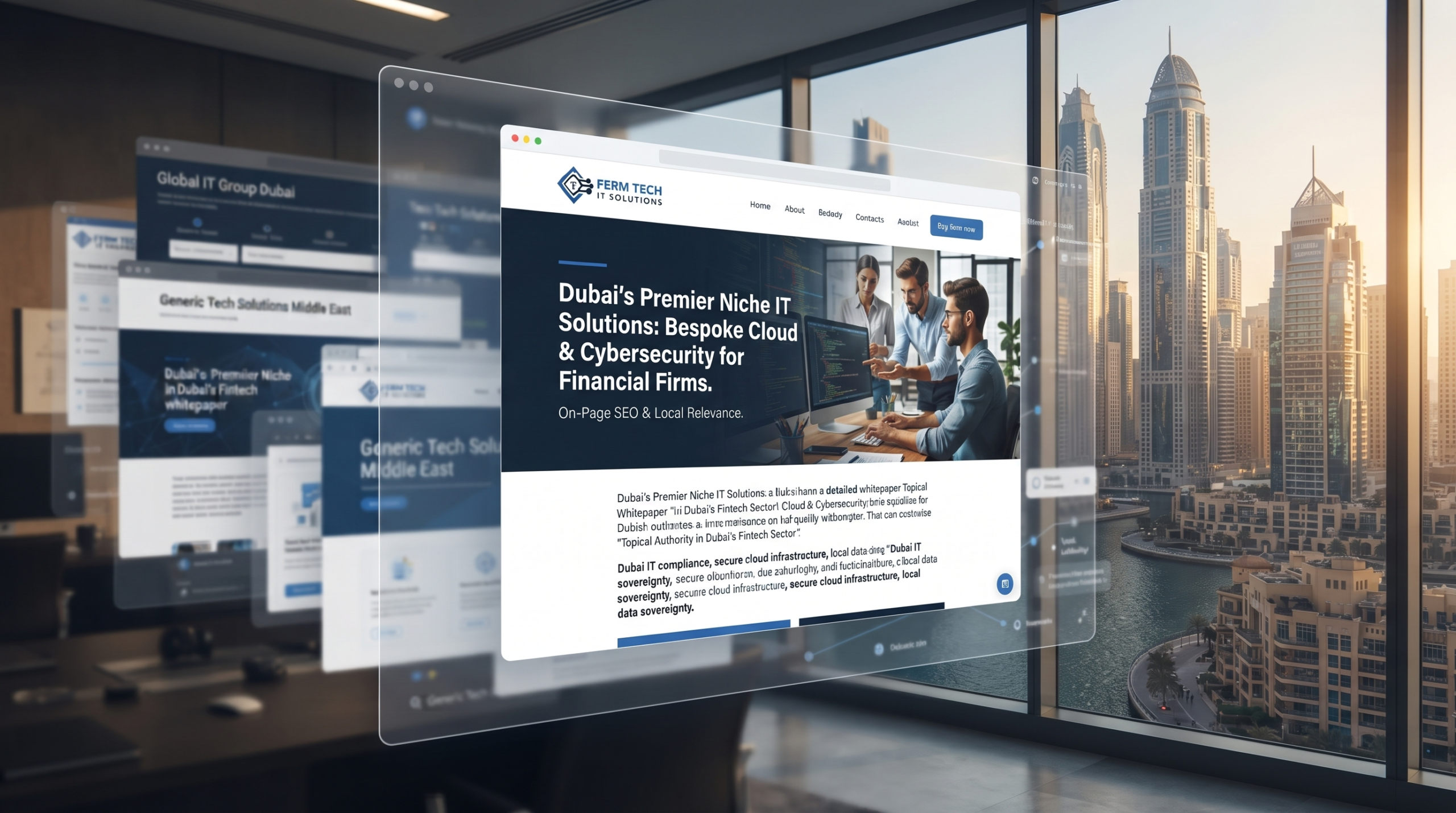
Converting Organic Visitors After They Reach Your Website
Matching Landing Page Experience with Search Expectations
When a visitor clicks through from a search result, they’re carrying an expectation set by that exact query. If the landing page doesn’t immediately confirm they’re in the right place same service, same area, same type. Of offer a portion of them will leave before reading further. This message-match problem is often invisible in ranking reports but shows up clearly in conversion rate.
Removing Friction between Organic Traffic and Inquiries
Getting organic traffic to convert into inquiries usually comes down to removing small points of friction. A contact form that asks for too much information, a phone number that isn’t clickable on mobile. A page that loads slowly on a mobile connection, or a lack of trust signals like clear service details. And credible contact information. Since a large share of Dubai search traffic happens on mobile, mobile usability and page speed directly affect. How many organic visitors actually complete an enquiry.

Building Topical Authority around Your Core Services
Creating Supporting Content around Commercial Pages
A single service page rarely covers everything a potential customer wants to know before making a decision. Supporting content FAQs, process explanations, comparison pieces, and use-case examples fills in those gaps. And gives search engines more context about what the business actually does and who it serves. This is less about publishing more content for its own sake and more about closing the specific questions. That sit between a visitor’s first search and their decision to inquire.
Using Internal Relationships between Pages to Strengthen Relevance
Internal linking does two jobs at once: it helps visitors move naturally from a supporting article. Toward the relevant service page, and it signals to search engines how pages relate to one another. A well-linked cluster a core service page supported by several relevant articles, all linking back with clear. And descriptive anchor text tends to build stronger topical authority than the same number of pages published in isolation.

Using Search Data to Discover New Revenue Opportunities
Finding Services Customers Want, but Your Website Does Not Target
Search data often reveals demand a business hasn’t consciously targeted yet. An SEO company in Dubai might discover it’s getting impressions for a related service it offers informally. But has never built a dedicated page for. These content gaps are usually easier wins than competing harder for existing terms. Because there’s little or no internal competition and often less external competition too.
Turning Search Console Insights into New Content Opportunities
Google Search Console is one of the more underused tools available to Dubai businesses already running SEO. Reviewing the queries generating impressions but little to no clicks, or pages with strong impressions but a low. Click-through rate, points directly to where a title, description, or entire page might need to be created or improved. Reviewing this data regularly, rather than once at the start of a campaign. Is what keeps a content strategy aligned with real search demand as it shifts.

Protecting SEO Growth during Website Changes
What to Check before Redesigning or Migrating a Business Website
Website redesigns and platform migrations are one of the most common causes of sudden organic traffic loss. Usually because SEO wasn’t part of the planning conversation. Before any redesign, it’s worth documenting the current URL structure, top-performing pages, existing redirects, and indexing status. So there’s a clear baseline to compare against once the new site goes live.
Preserving Organic Visibility When URLs or Content Change
When URLs change, every old URL that had earned rankings or backlinks needs a proper redirect. To its closest equivalent on the new site, not a blanket redirect to the homepage. This tends to lose most of the accumulated relevance. An updated XML sitemap, a reviewed robots.txt file, and close monitoring of Search Console in the weeks after launch. Make it far easier to catch indexing issues before they turn into a lasting drop in visibility.
Choosing an SEO Investment Based on Business Economics
Calculating the Value of an Organic Lead
SEO investment decisions get much easier once a business knows roughly what an organic lead is worth. That figure comes from two numbers most businesses already have: average deal value and the rate. At which inquiries turn into paying customers. A service with a lower search volume but a high average deal size can justify more SEO investment. Than a higher-volume service with thin margins, even though the second one looks more attractive in a keyword tool.
Deciding Which SEO Opportunities Deserve Investment First
Not every ranking opportunity deserves the same priority. Opportunities are generally worth pursuing first when they combine reasonable search demand, clear buyer intent, and a realistic chance. Of ranking within a sensible timeframe given current domain authority. Comparing this against the cost per acquisition of other channels, such as paid search, gives a business. A much clearer picture of where SEO fits into its overall customer acquisition mix. Rather than treating it as a channel to fund on faith.
Making SEO an Accountable Customer-Acquisition Channel
Rankings, traffic, and impressions are useful indicators, but they aren’t the outcome a business is actually paying for. The businesses that get consistent value from SEO services in Dubai are usually the ones that track. The full path — from search demand, through visibility and organic traffic, to inquiries and paying customers. Rather than stopping the conversation at page-one positions.
That doesn’t mean rankings don’t matter. It means treating them as one measurable step in a longer chain. That should ultimately show up in enquiry volume, conversion rate, and revenue. When an SEO effort is reviewed against those numbers instead of rankings alone, it becomes far easier. To tell whether the investment is actually working, and where it should go next.
Frequently Asked Questions
Can SEO generate qualified leads for a Dubai business?
Yes, but only when the strategy is built around buyer intent and not just search volume. Ranking for high-traffic terms with weak commercial intent tends to generate visitors, not inquiries. SEO produces qualified leads when keyword selection, page content, and the offer on each landing page are aligned. To what a ready-to-buy customer is actually searching for.
Should every service have its own SEO landing page?
Only when each service represents a distinct, searched-for offer with its own intent. Splitting a single service into multiple thin pages just to target keyword variations usually causes pages to compete. With each other rather than strengthening visibility. A dedicated page makes sense when there’s genuine search demand and enough unique content to justify it.
Can a new Dubai website compete with established domains?
It can compete on specific queries even before it competes on domain authority overall. A newer site that covers a niche question or sub-service more thoroughly and more relevantly than a larger. Competitor’s generic page can rank well for that particular search. While broader, more competitive terms typically take longer to win.
How do I know which keywords are actually bringing customers?
Google Search Console and Google Analytics, used together, show which queries and landing pages generate clicks. And which of those actually lead to inquiries or conversions. Tracking inquiries back to their landing page and, where possible, to the original search query is the most reliable. Way to separate keywords that build traffic from keywords that build revenue.
When should a business increase its SEO investment?
Once there’s a reasonably clear picture of what an organic lead is worth and which existing pages. Or keywords are converting, increasing investment makes sense to scale what’s already working. Or to capture adjacent search demand with a similar profile. Increasing spend before that data exists usually means guessing at priorities rather than directing budget toward proven opportunities.
Written by Athar Fareed
About the Author
Athar Fareed writes about practical SEO strategies, organic visibility, search performance, and lead generation for businesses operating In Dubai and the wider UAE market. His focus is on connecting search activity to measurable business outcomes rather than treating rankings as the end goal.